
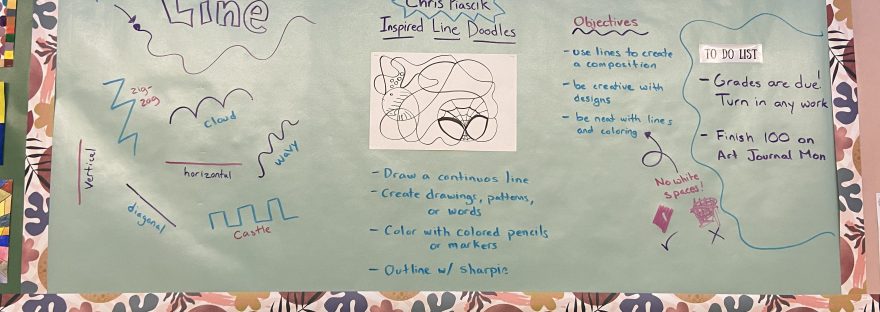
I have been in the classroom for over 15 years. I have taught kindergarten through 12th grade. I have taught private school, public school, as a lead teacher, as an assistant. I have run the gamut with classroom sizes, budgets, roles, etc. Over the years, there are musts I need to have in my classroom. Whether they are materials or items that make my life easier. Here are my top ten items I need for my classroom.
1. Erasable Bulletin Board Paper
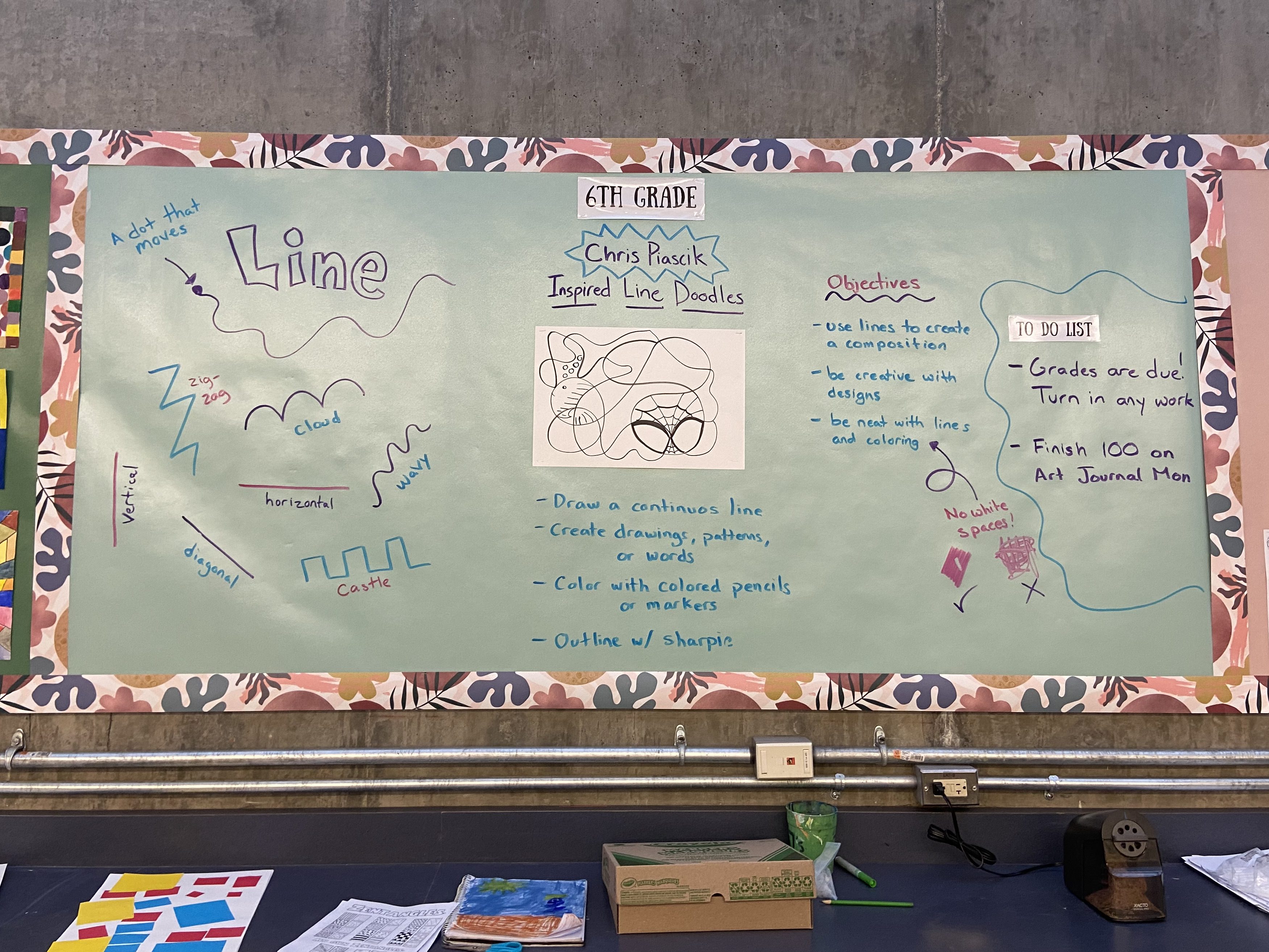
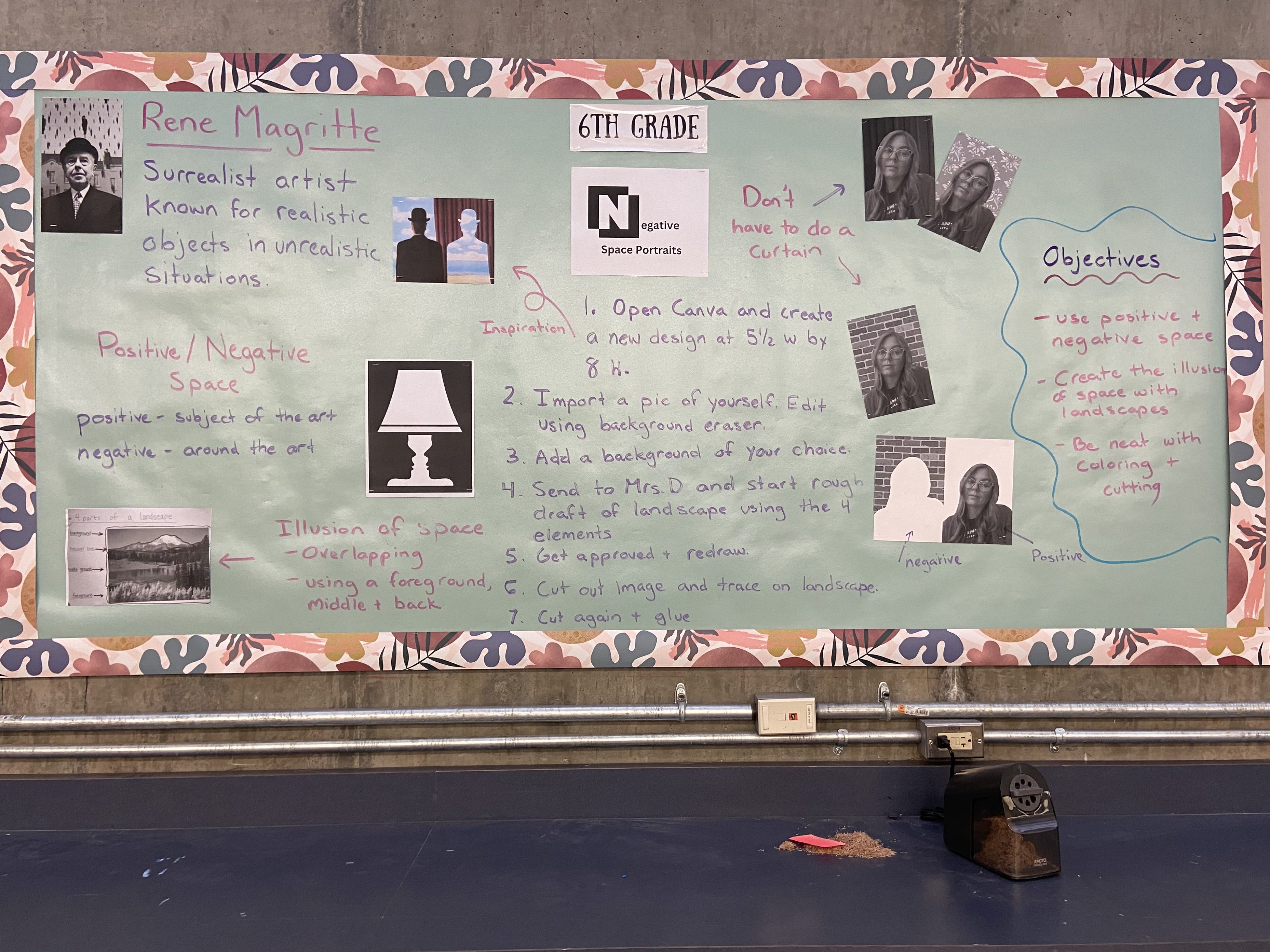
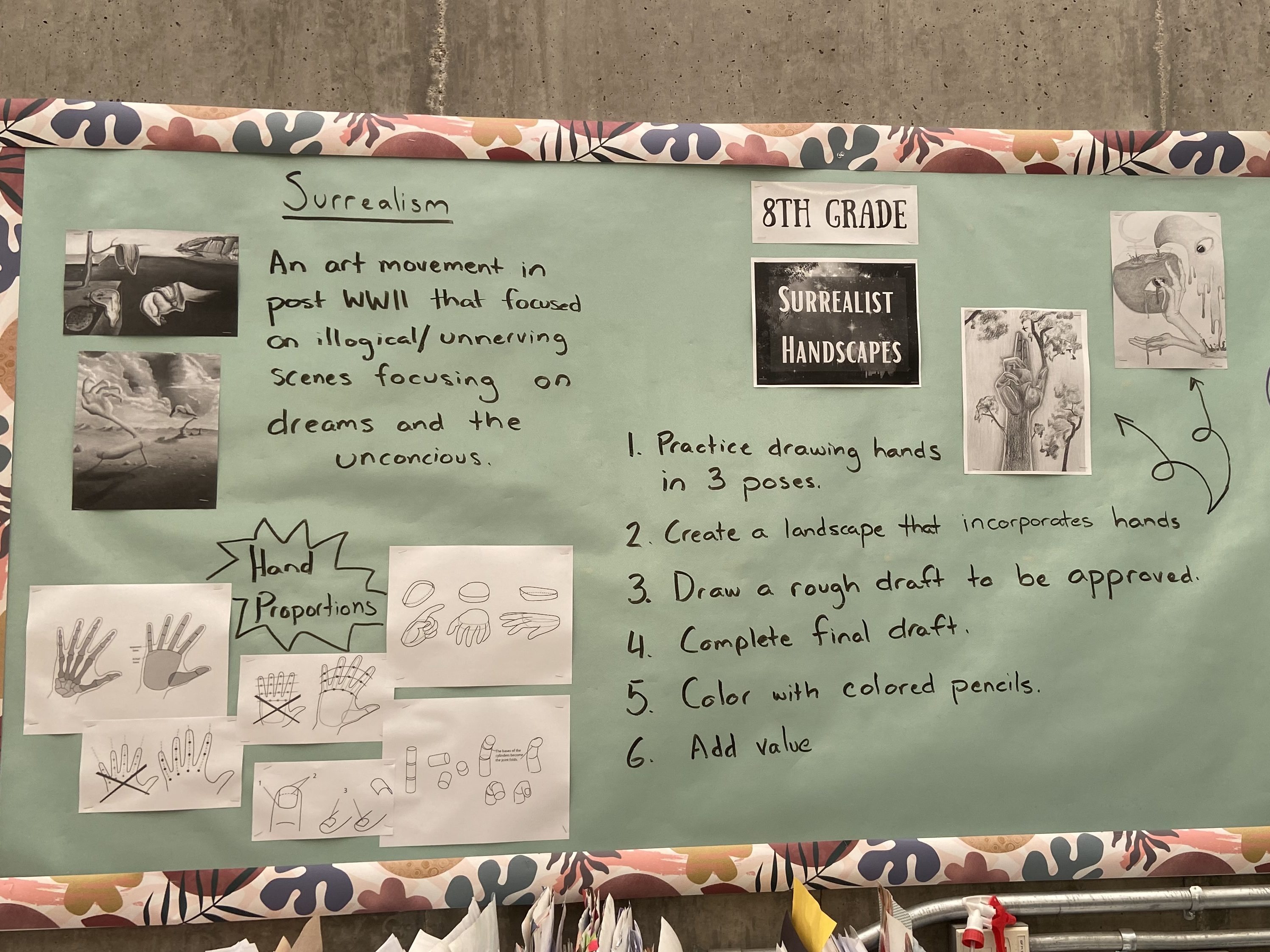
I discovered this amazing product last year called Better Than Paper and there is no looking back for me. I hate redoing bulletin boards, but this paper I put up at the start of last school year and still have it up because it looks just as good as it did when I first put it up. On top of that, you can write on it with white board markers and erases with water. I bought myself a pack of colorful white board markers to add color to my bulletin boards. Here are some examples of the boards I made through the year.

2. Sharpies
I go through sharpies like it is water in my room. They are extremely versatile and can be used with a variety of mediums and projects. I like to get a variety of sizes from ultra fine tip to the chisel tips to accommodate whatever activity I am doing. They tend to run out faster than I like (usually because we use them frequently) so I suggest storing them upside down. Another amazing tip I discovered was using rubbing alcohol.
- Place uncapped markers tip down in a bowl until you see some ink bleeding from the tip. Doing this one at a time will ensure each pen getting enough rubbing alcohol.
- Cap the marker for at least 20 minutes.
- Test revitalized marker and rejoin it to the class collection tip side down.
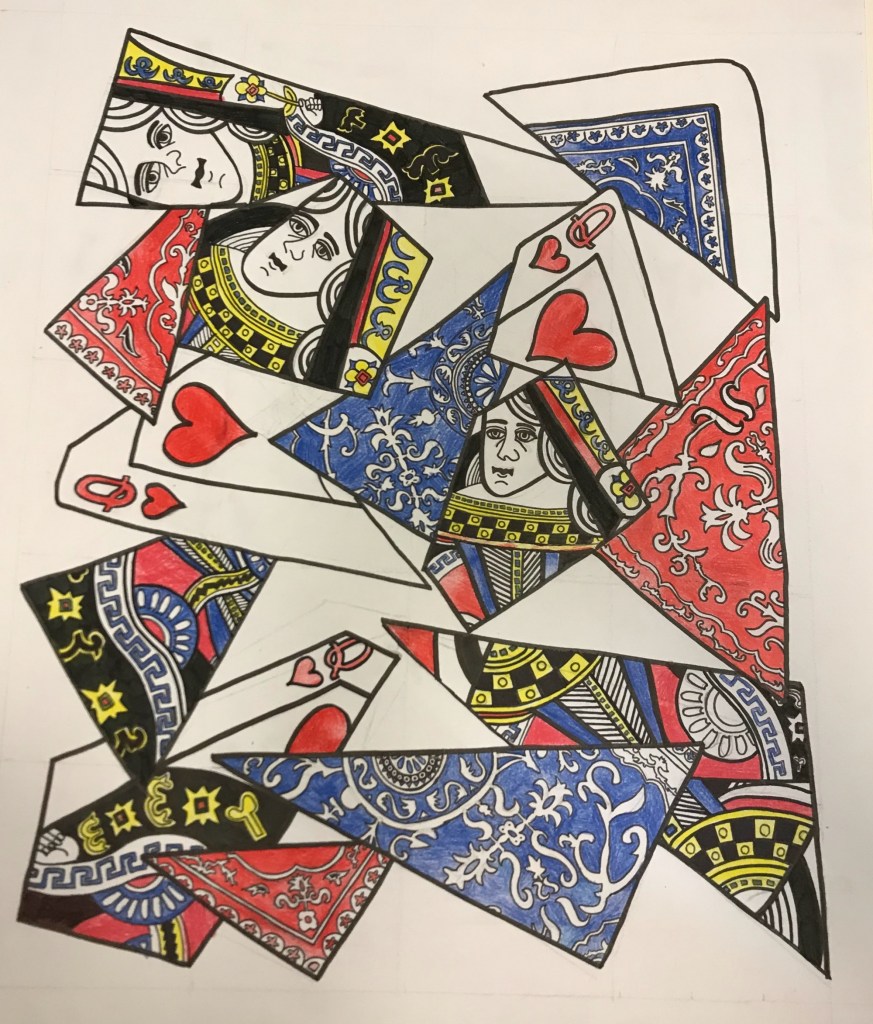
Here is an example from one of my lessons where we used sharpie to finish the piece. Click on the image to be taken to the blog lesson.
3. Watercolor
If there is something I use as much as Sharpies, it is watercolor. This medium is great for elementary school, but for older kids as well. I have taught k-12 and sped students and this is a must have for me. What I like most about watercolors is that it is easy to fill the paper and eliminates a lot of artwork with white showing from the paper. My biggest struggle with watercolors is students creating an even coat where one area is not darker than the other. However, I will take that over white spaces any day. This is my favorite watercolor palette. It is relatively affordable, comes with a lot of colors, and is easily cleaned. My biggest suggestion when using watercolor palettes is to leave them open when drying to avoid mildew or mold.

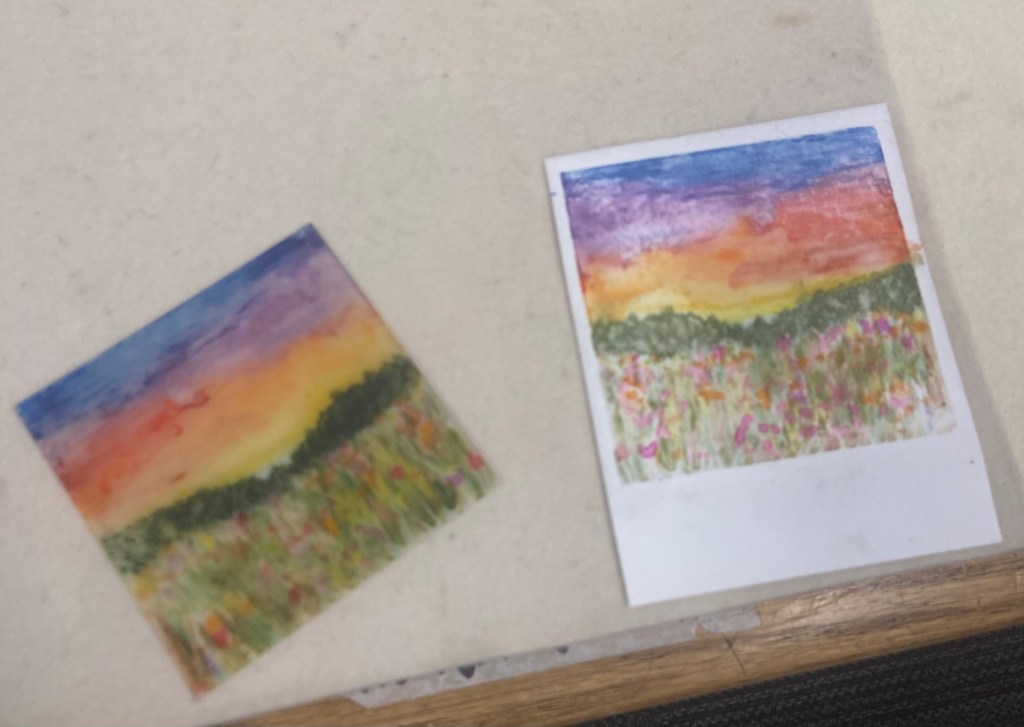
Above is a kindergarten and a high school lesson to show the versatility. Click on the pictures to be taken to the project.
4. Games
Games are a great way to give students a break and refresh their minds and focus in class. I will usually play a game once a month and a few at the beginning and end of the year. I have created a few games over the years that go very well in the classes. I have done these games with all different grade levels. Obviously some younger ages will need some tweaking.
Color Corners
- Age: K-3
- Played just like four corners but is done with colors instead.
- Directions:
- Put out 6 bottles of paint: red, yellow, blue, orange, green, purple
- The teacher leads the game and closes their eyes counting to ten
- Students choose a color table or area to be at being sure not to not make noise so to not alert the teacher
- When the teacher finishes counting, ask a color question in order to decide which color is out
- ex. All the primary colors.
- ex. The complimentary color to yellow
- ex. The two colors mixed together to make orange
- Objective: Students work quietly while practicing their color theory knowledge
Jeopardy
- Age: K-12
- Works best at the mid year or end of the year mark
- Jeopardy Maker
- Directions
- Create a list of questions to add to the jeopardy template
- Create categories for the questions like colors or art history but should be asking them things that you have taught them throughout the years
- Create teams or have it class against the teacher. This works best with lower grades.
- If you do teams, I prefer to have everyone answer and award points to the teams that answer correctly. If you do this method, I use whiteboards.
Cranium
- 3-12
- Works better with older students
- Played just like the game Cranium
- 4 categories: act it, sculpt it, draw it, and answer it
- students get into groups of at least 2
- come up with different art questions for answer it and different words for the Pictionary, sculpting, and charades
- use a wheel of names to choose which category to complete
- All students play each round
- Answer it: all groups that answer the question correctly are awarded points
- Draw It, Sculpt It, and Act It is the group that guesses first
- I have the students all sit and raise their hand in order to be called on.
- Disclaimer: I had many students this year cheat during this game so I stopped playing it for now. Be sure to build trust and management with the classes you play this game with. It is no fun for anyone.
Art Trivia Teams
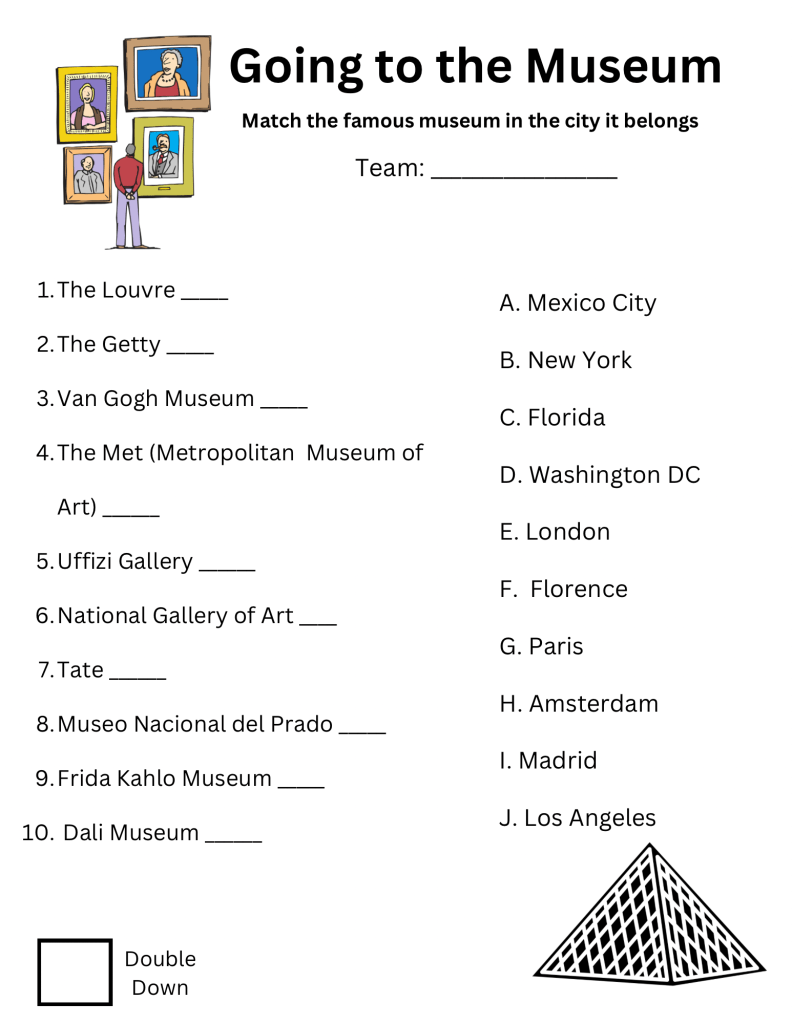
When I was younger, I use to go to Trivia night with my friends and always had a great time. I wanted to somehow incorporate that into the art room and creates this trivia game. You can download the file below. Each round the group answers the trivia page and have the opportunity to double down if they think they got all the answers right. However, if they get even one question wrong they lose all the points.
- Who Am I: in this round you will ask 10 questions. The first question is obscure and then they get more specific. If they get the answer right on the first question, they get 10 points. Then 9, 8, and so on. Each group can answer once per round.
- Going to the Museum: match the museum to the city
- Elements Matching: matching art element to the definition
- Artist Matching; match the artist picture to the name
- Name that Color: each question has a name of a color as part of the answer
Rules and worksheets can be downloaded below
5. Centers
Centers is a must do for elementary students. Early finishers can cause a lot of disruption. Having center activities can help curb the chaos that comes. To ensure centers are successful, it is important to fully go over the rules and clean up procedures in order to make it as independent as possible. I find that you may also have to stop students from rushing through their work just to get to centers. Especially those who love legos.
I have discovered that my middle schoolers LOVED centers as well and equally helped manage any early finishers.
Legos
If you only have one center, legos is the one to get. I don’t buy the name brand because they end up getting lost by the end of the year so I buy these inexpensive ones that are just as good.
Magna Tiles
Just like legos, these magna tiles are great for students who like to build and helps with three dimensional thinking.
Perler Beads
I’ll be honest. These are a headache. They get everywhere and you’ll have to iron them right away or they will pile up and the chances of them getting knocked over and ruined is a high likelihood. Saying that, the kids love them and they are great for motor skill development. So I deal with the headache of them for the benefit they have.
6. Paper Cutter
I spent one year without a paper cutter in my classroom and it was incredibly difficult. I was able to forage for one, but it had a messed up blade and constantly cut my paper badly. This is kind of a no brained for any art teacher, but spending a year without one made me realize how essential it is. This paper cutter is a heavy duty one. However, this past year the paper cutter I had access to was in the adjoining room and I wasn’t always able to go there during class. There were these small paper cutters that worked well when I couldn’t leave the class. If you have a tight budget, these paper cutters will definitely do the job.
7. Quality Pencil Sharpener
Nothing is worse than a pencil sharpener that keeps breaking or doesn’t work. Students can sharpen a whole pencil in one sharpening if the sharpener is bad. I try not to use electric sharpeners for colored pencils, but find that it works best with a good sharpener.
8. Elmer’s Glue Sticks
This is a give in, but I have inherited classrooms with an array of glue sticks or wet glue. Wet glue I find to always be a mess. Even with older students, wet glue can be a problem with the neatness of a project. Non Elmer brands are just not worth the money you save. In all honesty, Elmer’s isn’t that much more expensive than the other brands. You can especially find good deals on Amazon and Target’s back to school sales.
9. Mixed Media Paper
Mixed media paper is the best paper to use for the art room. It works with all mediums. It may not be the best for watercolor or painting, but for beginning classes and students, it works perfectly for those scenarios. If you are working with more advanced students or have a project using watercolor or paint that you are particularly excited about, I’d recommend more specific paper. I usually buy about 3 orders of these mixed media paper packs. They are 12×18 so you can complete large projects or cut them down to 9×12 easily.
10. Cutting Mats
I’d love to have a class set of these cutting mats, but if you don’t have the budget like myself, I do recommend at least buying a personal one for yourself or a large communal one for the classroom. Many times I would need to do some specialized cuts or have items too large for the paper cutter. My desk always has my small paper cutter and cutting mat for that reason.
Hopefully my top ten gave you some insight or helpful links for your back to school needs or classroom set up!
As an Amazon Associate I earn from qualifying purchases

 In the Art Room with Mrs. D
Great insights! As an art teacher, having the right tools and resources can make a significant difference in the classroom. I recently started using a wheel of names to engage my students more during activities. It adds an element of fun and ensures everyone gets a chance to participate in our
LikeLike