
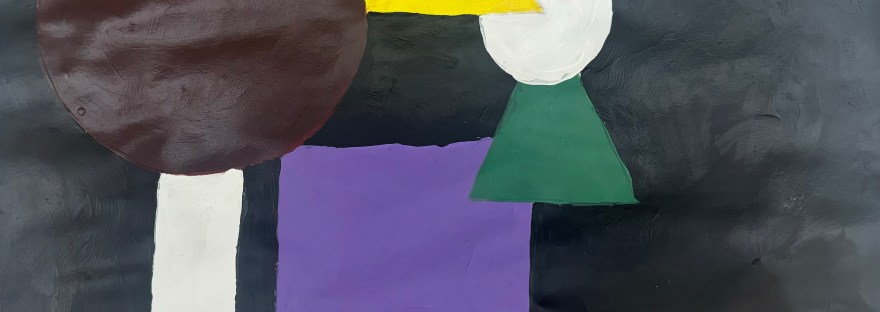
I teach color and color theory every year to all my classes. I am teaching middle school and wanted to find a new way to introduce the concept. Last year I had a 100 color painting that did not go so well. Students who had my class would discuss how hard the assignment was. So I took that feedback and shifted my color mixing lesson to French cubist painter, Auguste Herbin.
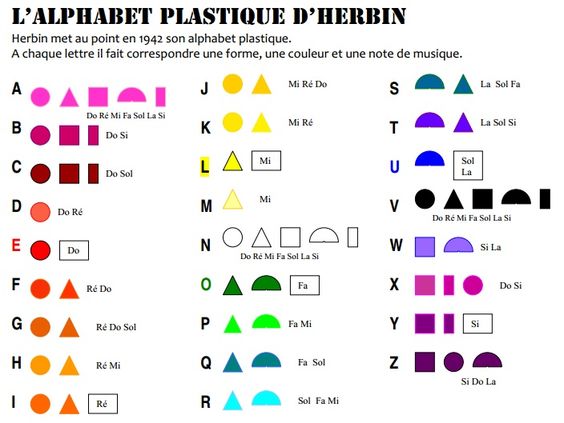
Auguste Herbin was a pioneering French artist celebrated for his unique approach to abstraction and color. One of his most fascinating contributions is his alphabet plastique, a visual language made up of geometric shapes and vibrant colors that convey meaning. In the lesson I developed, middle school students would choose a “secret” word for a painting and have to mix the color to match Herbin’s alphabet. The main take away from the activity would be learning about painting techniques and to accurately match colors using primary colors, white, and black.
Creating a Secret Word with Herbin’s Alphabet
Objective: Students will create an abstract painting inspired by Auguste Herbin’s Alphabet, focusing on color mixing and composition while creating a secret word for viewers to decipher in their painting.
Materials
- Mixed Media paper or watercolor paper (very sturdy and not as expensive as canvas paper)
- Acrylic or tempera paints
- Brushes (various sizes)
- Palette/paper plates for mixing colors
- Ruler and pencil (for geometric shapes)
- Optional: stencils for shapes
As an Amazon Associate, I make a small commission on purchases made through my link recommendations.
Steps
Introduction to Auguste Herbin
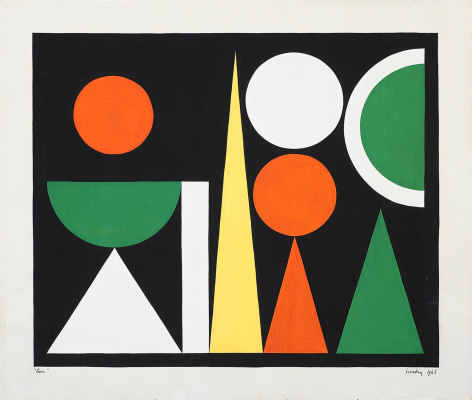
I began the project by introducing students to Auguste Herbin and his artwork. I played an excerpt from an episode of Antiques Roadshow that appraises one of Herbin’s paintings. The painting ended up being worth $30,000 after only being bought for less than $100. After the video, I gave each table a printout of one of Herbin’s paintings and his alphabet. I challenged the students to try to decipher the word in his painting. I chose one that was a bit easier than the others. This particular painting spelled out Lion. It was entertaining to see the students try to break the code of the painting. I completed this activity in 2 classes. I had one table per class guess the code correctly. The class was excited about the reveal and it was a great way to get them interested about the project.
Rough Draft
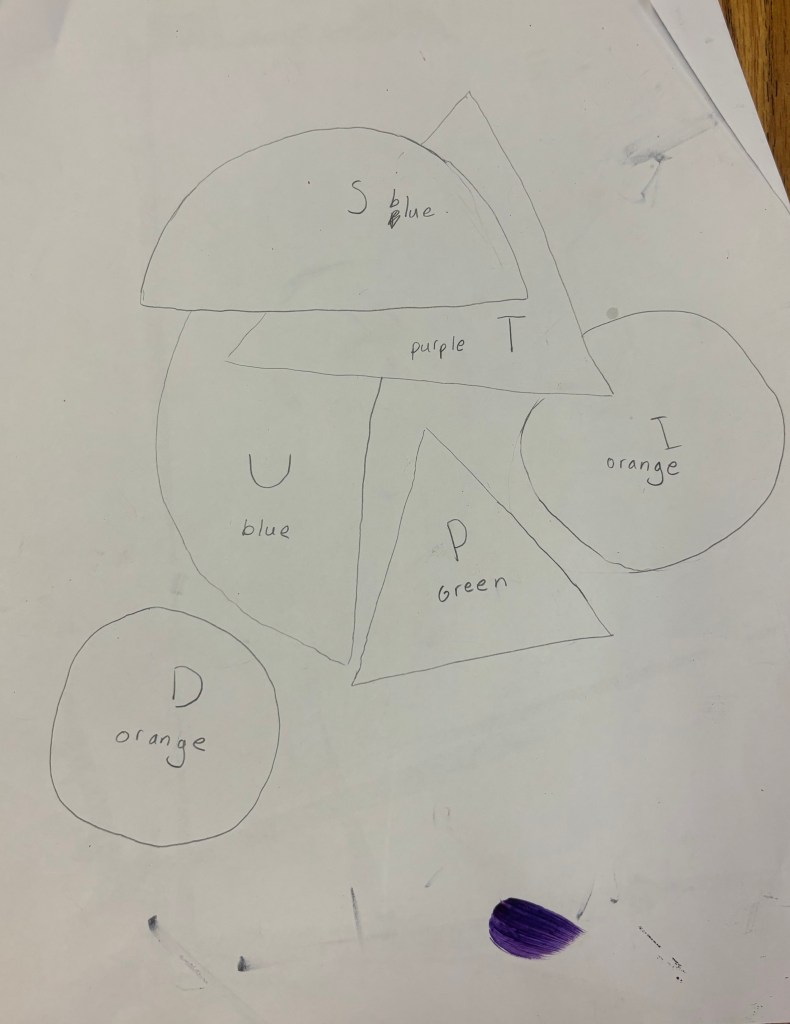
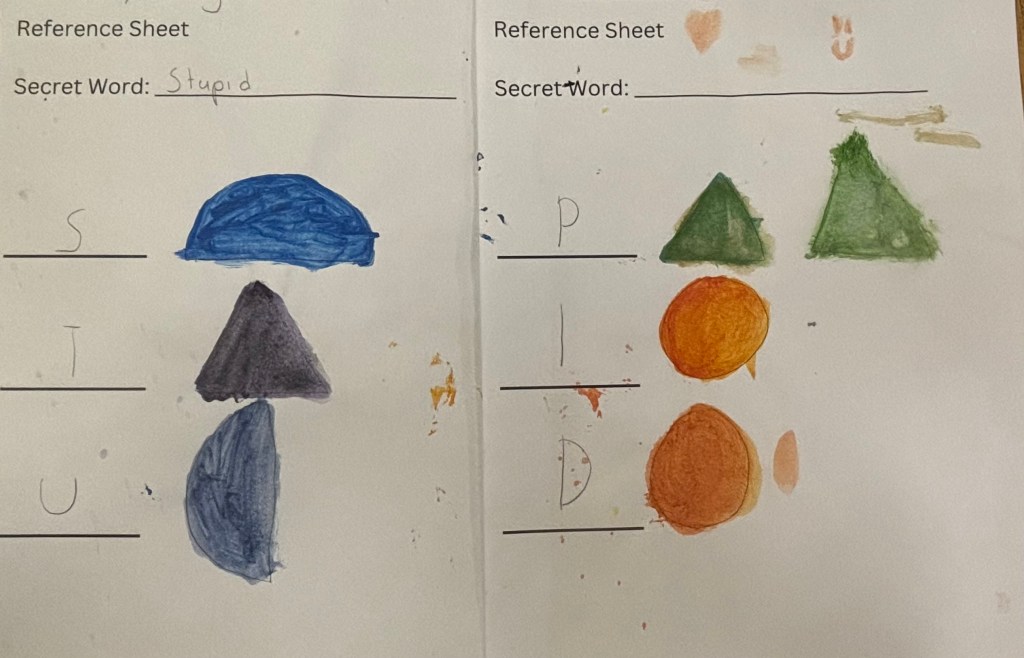
Before we moved onto the color mixing practice, I had the students think of a secret word and make a rough draft using Herbin’s shapes to create a composition. I discussed how they could use a letter more than once even if it appears once in their word (like in the Lion example)and encouraged them to use the space, overlap, and think about how the shapes related to each other. Students were not allowed to use letters that did not appear in their word. Once their rough drafts were approved, they moved to the next activity of mixing colors to match Herbin’s alphabet for the letters they used.

Explore Color Mixing
Before starting on their paintings, students experiment mixing colors with primary colors (red, blue, yellow) and black and white to match the letters for their secret word. While mixing their color, they will use the alphabet plastique as a reference. They would check in with me once they were done and I would use the alphabet to give them critiques on mixing the color to better match Herbin’s. This would be used as a guide when completing their final painting.

Final Painting
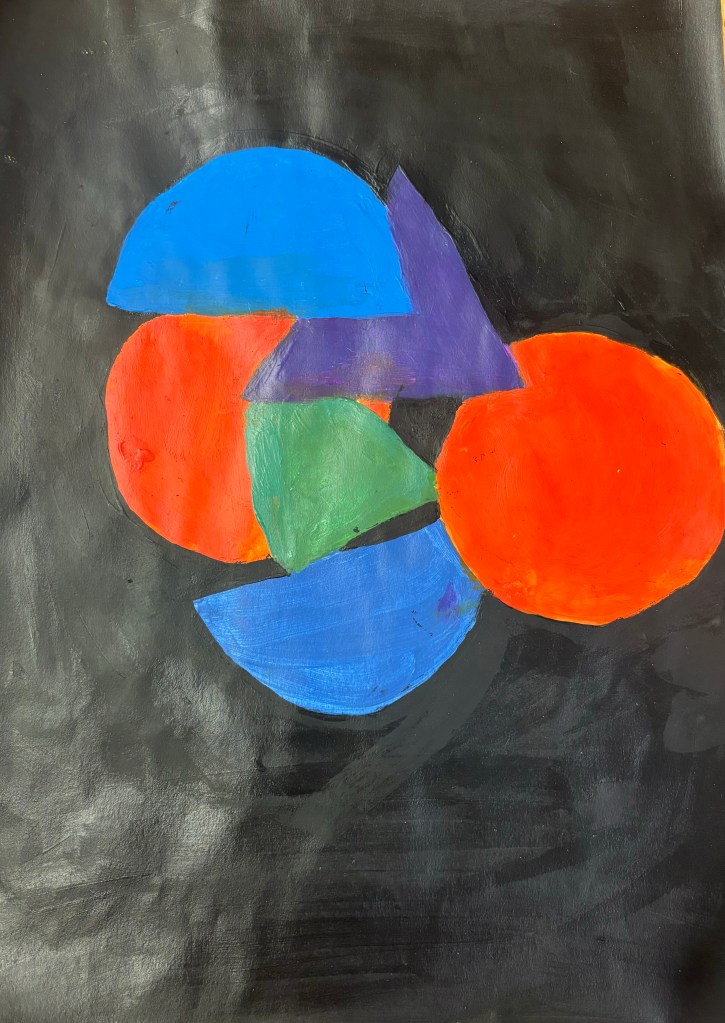
Once students have their designs and color mixing practice completed, it’s time to transfer their sketches onto the canvas. Using a ruler, compass, stencil, etc, they can lightly outline their shapes and design onto a sturdy paper. Now comes the exciting part. Encourage students to use their mixed colors to fill in the geometric shapes. Remind them to experiment with layering and blending colors within the shapes to create depth and interest. They can also use different brush techniques, such as dabbing or swirling, to add texture to their work.

Reflection and Sharing
Once the paintings are complete, give students time to reflect on their work. Ask them to consider questions like:
- What colors did you enjoy mixing the most?
- How did you decide which shapes to represent each letter?
- What does your secret word mean to you?
Host a mini-gallery walk where students can display their artwork. Encourage viewers to try and decipher the secret words represented in the paintings. This interactive element adds a fun twist to the project, as classmates engage with each other’s work.
Conclusion
This painting project introduces middle school students to color mixing and abstract art while encouraging creative thinking and expression, much like Auguste Herbin. By creating their own secret words using Herbin’s Alphabet, students can explore the endless possibilities of color and form, making art a personal and meaningful experience. So grab your brushes, mix those colors, and let the creative journey begin!

 In the Art Room with Mrs. D