


Picasso is a great artist to teach to young kids. I like introducing him to kindergarten students because he was a very skilled, technical artist, even considered a prodigy. He mastered realistic drawing early in his life and began exploring abstraction during a time when abstract art was not a thing. He found new ways to see the world because he mastered the world he lived in. I think kindergartener’s lend themselves well to this activity because they aren’t afraid to make something look funky and abstract.
Introduction
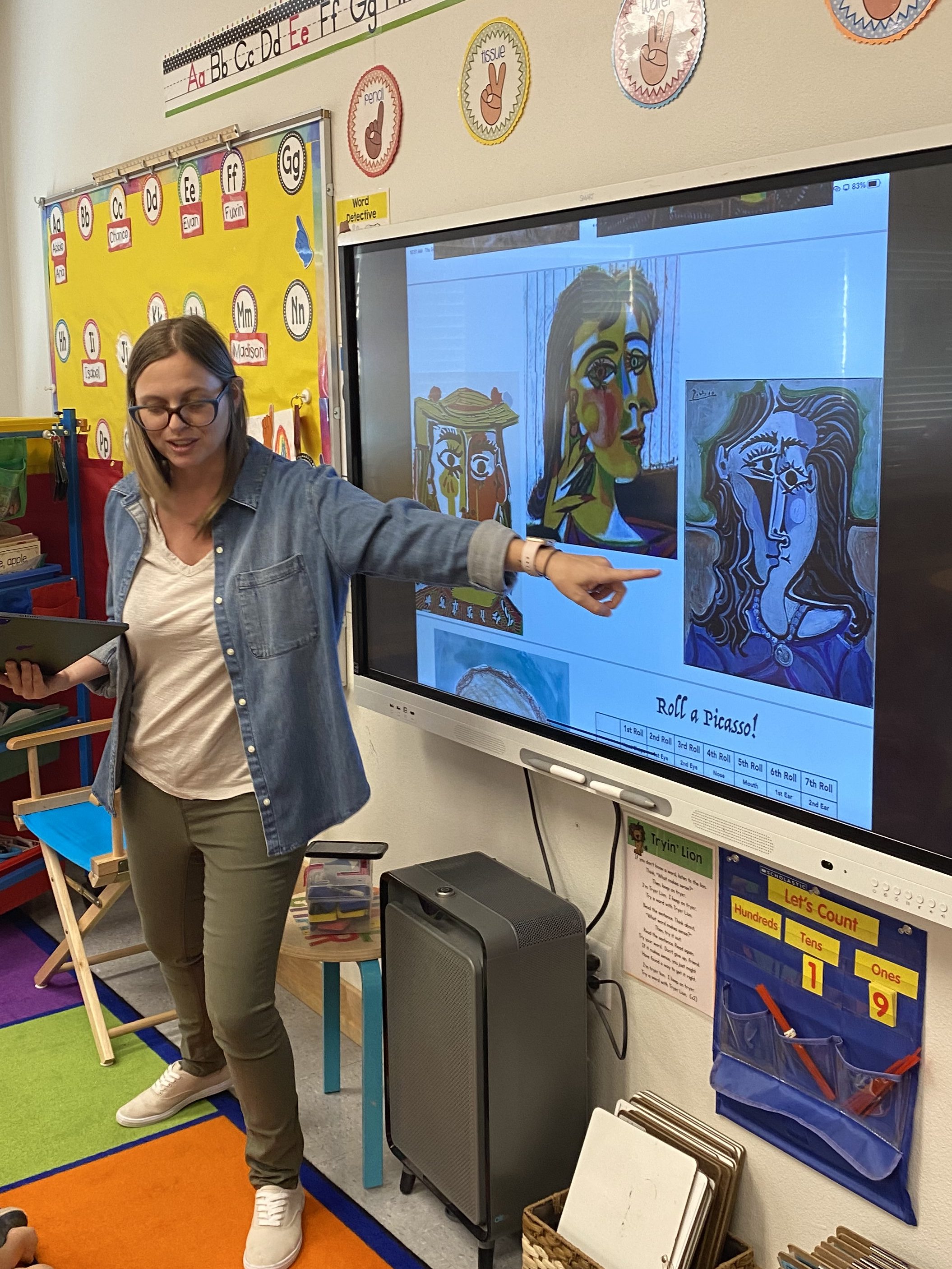
When introducing this lesson, I always like to show Picasso’s artwork from throughout his life. Picasso started out making realistic portraits, mastering techniques when he was young. As he grew older, he bang branching out and playing with abstraction until he created the art form Cubism. Images can be shown in your classroom for educational purposes, however, his artwork is not yet in the public domain. Here are some links to images I like to show to the students prior to the project.
Self portraits from 16 years old to 90

After looking at Picasso’s self portraits throughout his life, I then move on to his portraits of women. I find these photos to be good discussion pieces for there is a lot of color, unusual facial feature placement, and an overall funkiness to the image that kids enjoy. Some questions to ask your students are;
- What do you notice about the faces that are different than real life?
- Tell me about the facial features? (eyes, nose, ears, mouth)
- How does he color his portraits?
Portrait of a Woman with a Hat
Materials
- Pencil
- Eraser
- Watercolor or heavy paper (I usually use card stock)
- Ultra fine tip sharpie
- Watercolor
- Colored Pencils
- Optional: Reading Comprehension Worksheet
Steps
1. Teacher goes over the introduction of Picasso and his abstract self portraits and portraits of women.
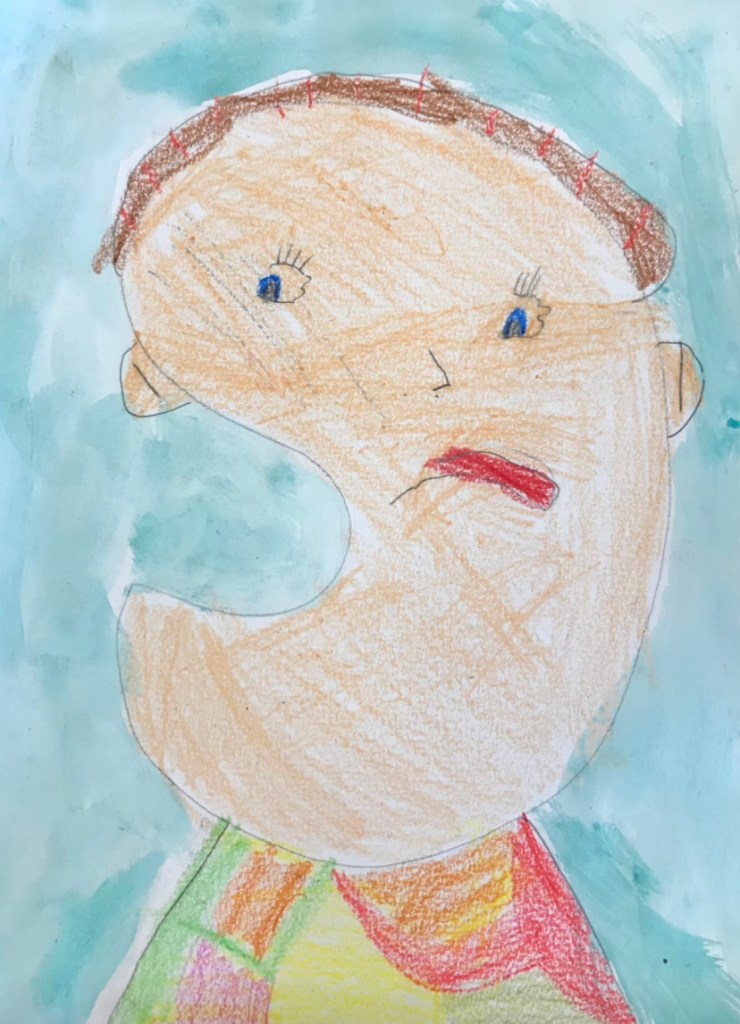
2. Students are given instructions on making their own “Picasso” self portraits. I like to give them a sheet of Picasso facial features. You can find these on Tpt under the Roll a Picasso game, however, I do not have them roll for their features but rather them pick from the references to use. This allows more creative freedom in my opinion. This is also a reference for those who need it. They can create their own features as well with Picasso as inspiration. I like to give both options for those who may struggle with coming up with their own ideas. Putting it all together is where they can show their creativity.
Student Art Instructions
- Draw your face shape first. Draw to fill the space of the paper given to you. Try not to make little tiny heads on this big piece of paper.
- Show you drawing the shape; draw a small one first and then a normal one to show them the difference
- Add your neck and shoulders if you want after you have drawn your head (drawing the head first will avoid students making a very long neck or a picture that is mostly shoulders with a small head)
- Once you have your head, neck, and shoulders (if added), you can now use your reference sheet or your own ideas to create your face. Remember, you do not need to be placed where they normally would be placed. Picasso had his facial features all over the place. Feel free to get funky with your portraits.
- When you are done drawing, trace your image with the ultra fine sharpie and erase any pencil marks.
- Color your final image using colored pencils and watercolor.
- I have found that using colored pencil to finish the portrait and watercolors in the background works the best, but all watercolor works too. I would avoid using just colored pencil because it can become difficult for the kinders to color their whole image. Watercolors are much easier.
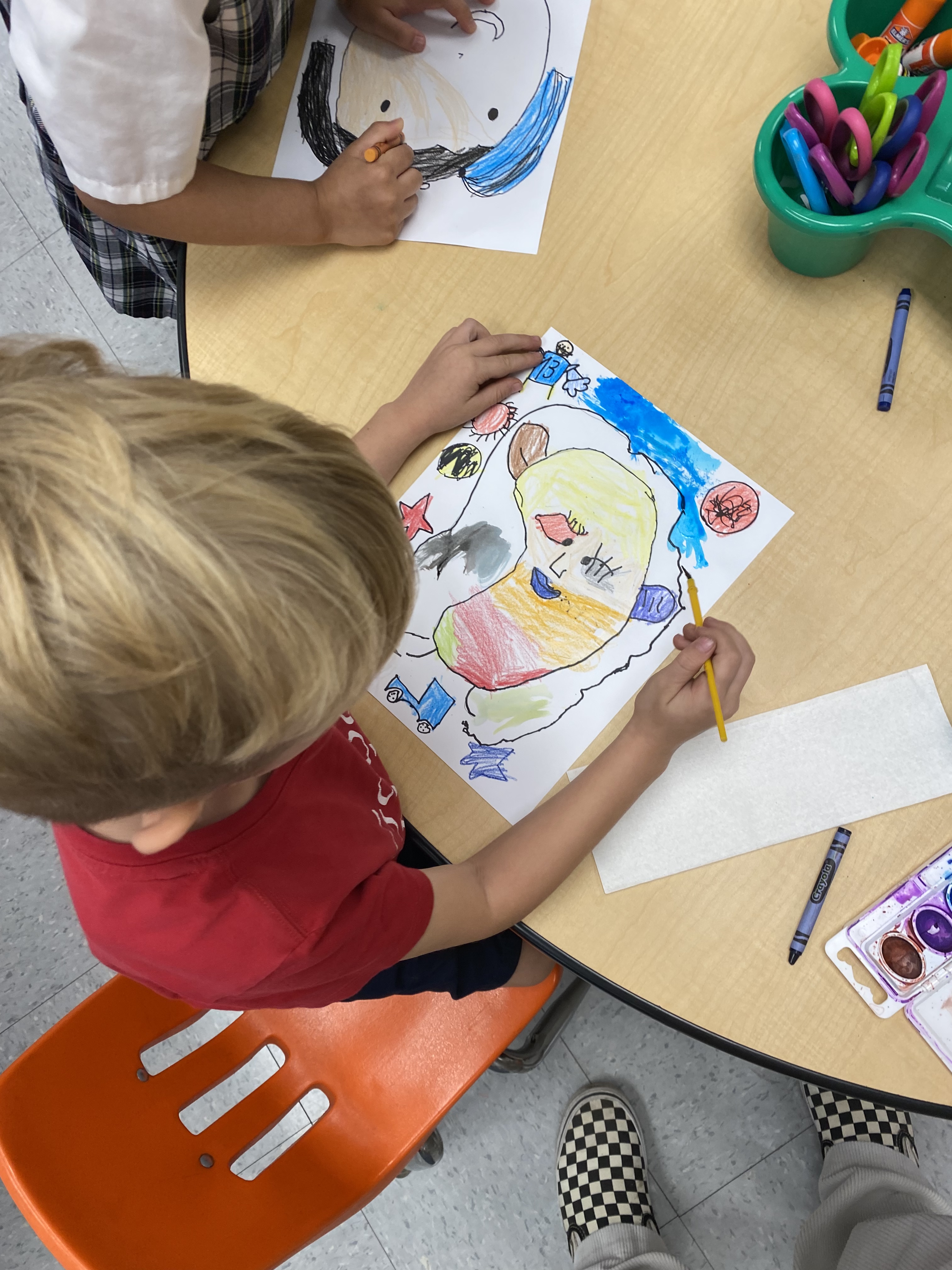

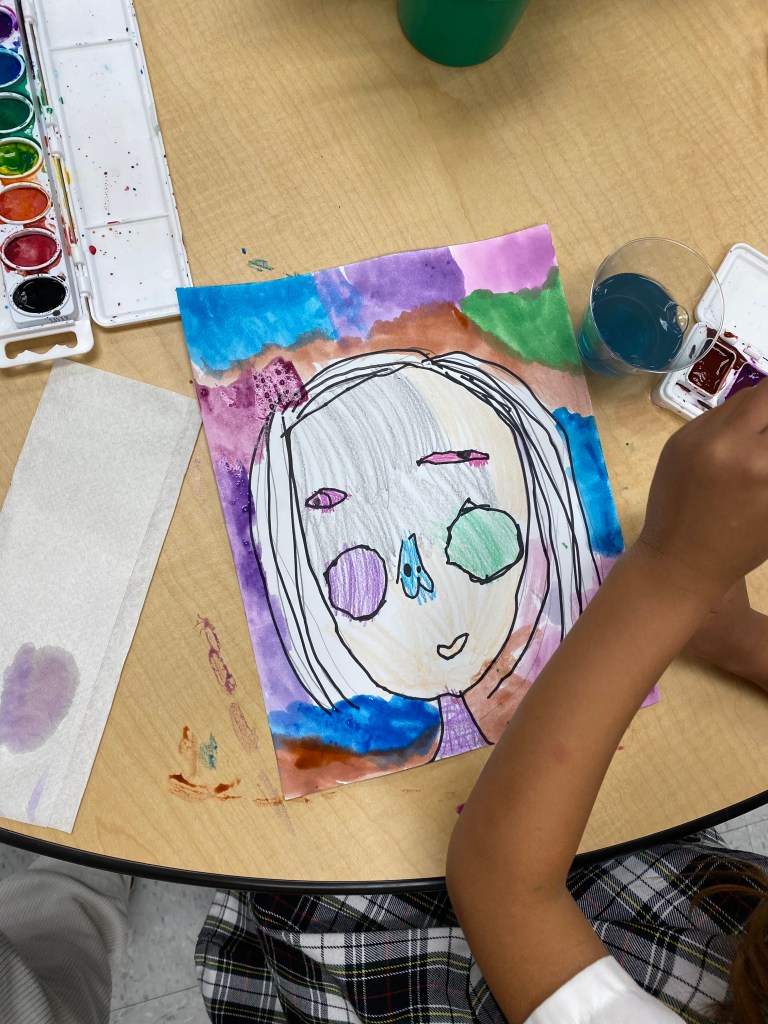
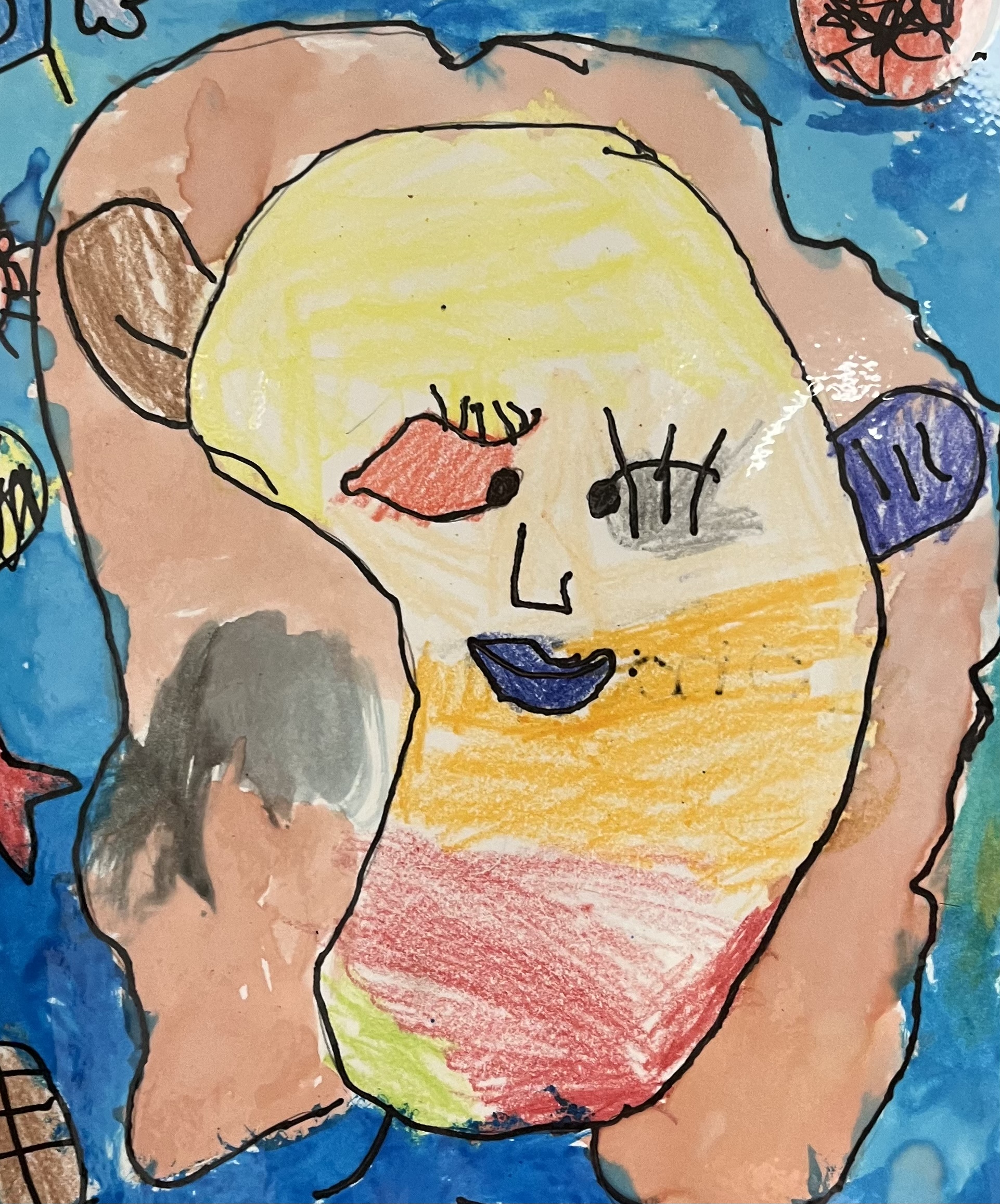
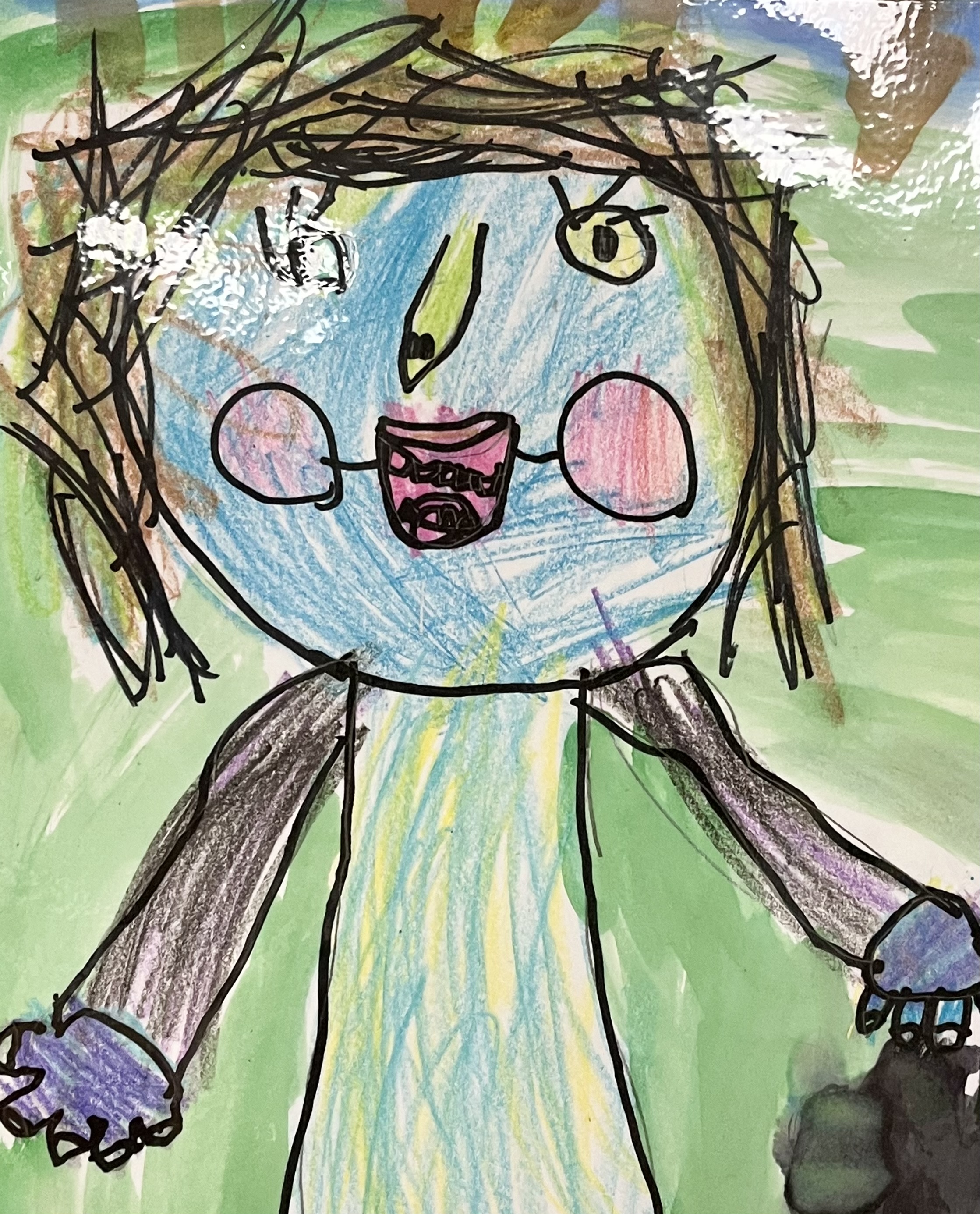
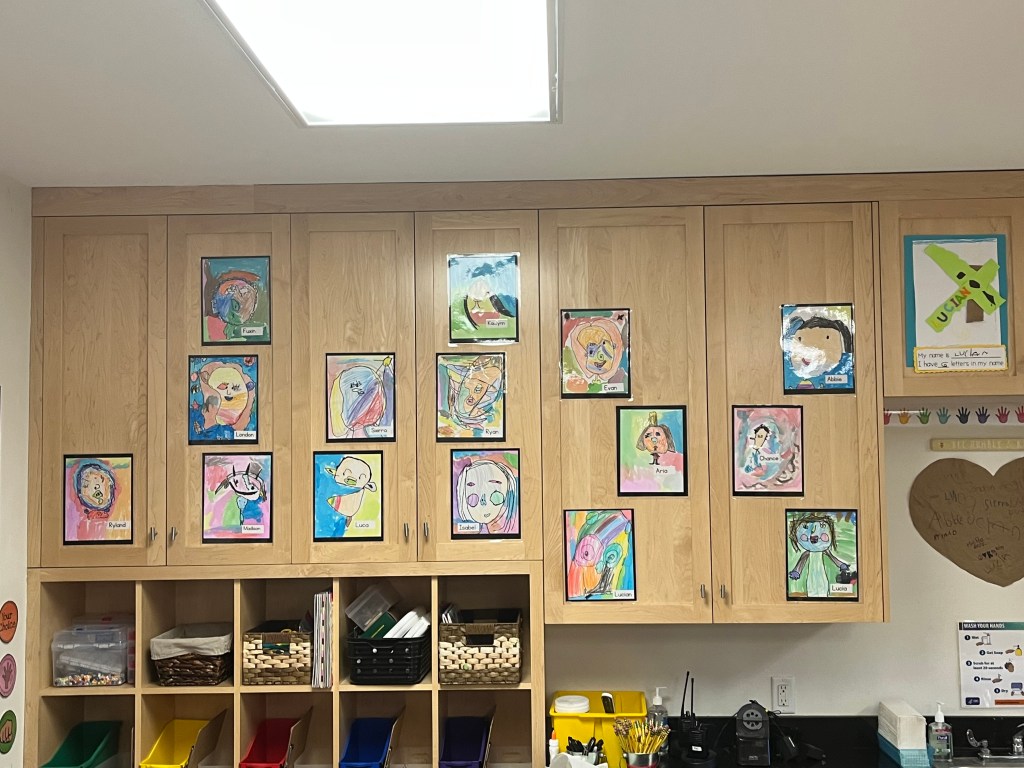
These artworks come out so different showing each kinders individual personality. It’s a great lesson to do at the beginning of the year and makes awesome wall art for back to school night!

For an added activity for this lesson, check out my reading comprehension passage with questions and lesson plan on tpt. The passage is for grades 3-5, but can be read to the class as an intro activity for kindergarten through second grade. A great way to activate student learning and create an opportunity to have a class discussion about art and artists.

 In the Art Room with Mrs. D