

Over the years of teaching, I’ve encountered one questions that I have learned to answer and developed my classroom around…
“How can you grade my art when art is subjective?”
In my first years of teaching, I would sometimes take offense to this questions as if I was being told that my class did not matter or students came with the mentality that their art skills could not improve and shouldn’t be judged on a skill that is considered a “talent”. However, every art teacher knows this not to be true and that practice, reflections, and critique is the only way to improve as artists.
Product vs. Product
The best way to combat this mentality is to focus on the process and not the product. Many times students feel not confident in their creative abilities, but giving them a chance to use pre-activities, planning, and discussions can be a solution to this problem. Here are some activities to consider.
1. Polls/Morning Messages
When students enter the classroom, you can engage their thinking by creating a poll or a morning message for them to participate in. This can be something about the days lesson or a status update in their progress on their current project. I find Google Forms helpful for this task (with dealing with older students) because their answers are sent right to your google drive. For me, I make it participation credit and don’t focus on how long the content is so that they get use to talking about art (with the exception of one word answers of course)

2. Pre-Activities
When introducing a lesson, a lot of the times I will have a video or presentation that they watch on the history or background of the skill/artist. I would then have them write a reflection on what they have learned or a prediction about what they will learn. Again, Google Forms is a great source for this. I also have had them participate in a practice activity that will help them with the final project. For example, if we are doing a lesson on using grids, I might have them do a practice sheet. I have found that practice sheets (like the example below) helps with their understanding when completing the more elaborate project.
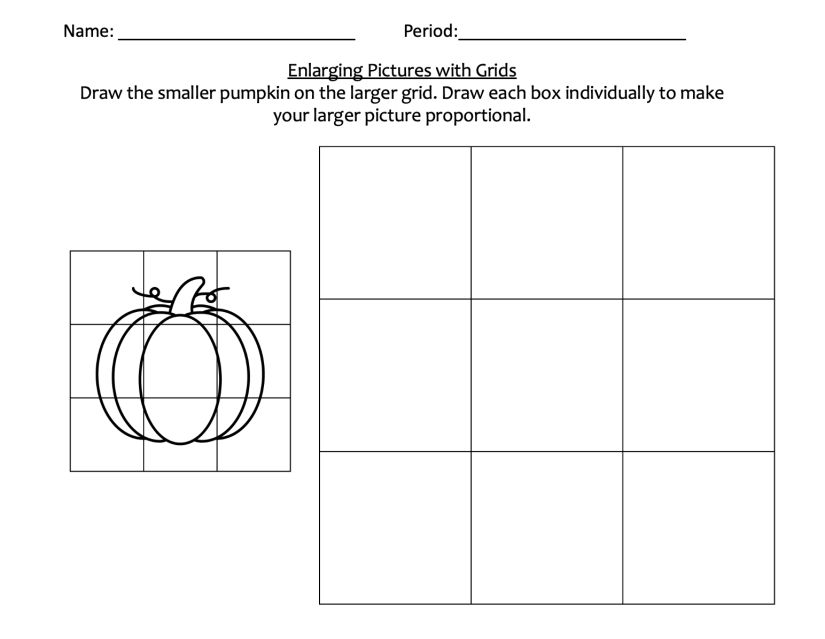
3. Planning
Another great way to help grade a student in art is through the planning process of the lesson. Many times a lesson will require an idea stage and rough drafts. Both of the activities can serve as an assignment and can be graded. For example, for my alebrije lesson , I would start with having the students research animal symbolism and find two animals that they have a connection with (like I may choose elephants because they symbolize family). They will submit 2 animals, what their meaning is, and why they chose it. There is no talent or art skill required, just effort and using their own personal interests as a connection to the work.

4. Critique
Finally, students can be graded on critiquing their work and the work of others. This is also a critical step in the art room and is a skill that needs to be practiced. Many times I will have students who are extremely uncomfortable discussing their art, receiving feedback, or giving feedback to others. To be honest, my first critique I felt the same way. However, the more you participate in this step and look critically at your work, the easier it becomes. For this, I can make a self-reflection assignment, pair, small group or whole class critiques. I also include a section where the students critique the actual lesson as well to help develop my curriculum even more. It is no fun teaching a lesson that no one liked.

 In the Art Room with Mrs. D