
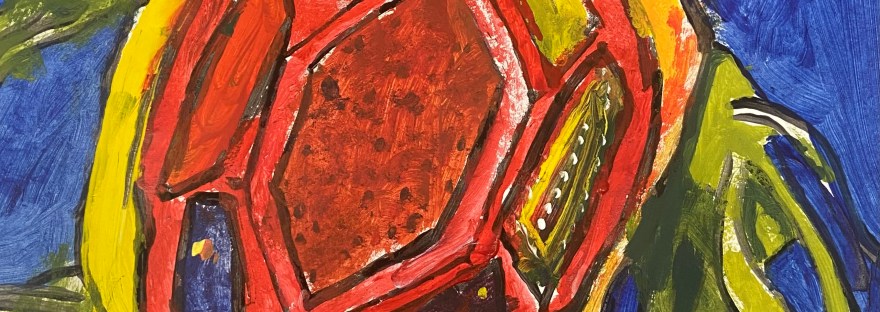
I have always loved alebrijes with their bright colors and patterns. It wasn’t until I wanted to teach alebrijes as an art project that I learned the history behind their creation. Back in the 1930’s, paper mache artist, Pedro Lineras Lopez, had a nightmare where mythical creatures were following him around a forest chanting “alebrije”. When he woke up, he started to make these creatures through sculpture. Many artists have followed this new art form, some continuing the paper mache style while others carving the figures from wood.
I have done this project before using paper mache, however, I taught a painting class last year and wanted to continue to teach this project for I think it is fun and interesting. In order to continue using it in my curriculum, I incorporated the requirement of using a color scheme in order to continue developing their color mixing skills and knowledge of color. Before discussing the project with the students, I would go over different color schemes in a presentation as well as post the slides to whatever blended platform I was using for reference. The color schemes I discussed were
Color Schemes
- Analogous: three to five colors next to each other on the color wheel
- Monochromatic: one color mixed with white and/or black to make a variety of shades, tints, and tones.
- Triad: 3 colors spaced evenly on the color wheel (red, blue, yellow and green, purple, and orange are examples)
- Complimentary: colors across from each other on the color wheel (ex. Purple and yellow)
- Split Complimentary: two colors on either side of one complimentary color (ex. Purple and yellow orange/yellow green)

Introduction
I get my class interesting in the project by first asking if anyone has seen the Disney movie Coco before. Many of them have, which makes introducing alebrijes easier. This video interviewing the artist behind Pepita, Alonso Marinez, is a short and sweet giving an awesome explanation on the art form as well as how he created the characters. I do, however, like to explain that Disney took the liberty of making alebrije spirit animals, which is not really true. Disney is known to do that from time to time, nonetheless, it is still a good video as an introduction.
For this project, they will be researching the symbolism behind an animal and choose 2 animals that they relate to. My example is always an elephant for elephants symbolize family. I am big on family and say that is why I would choose that animal. They will have a connection to the animals and can write why they have chosen those animals as a pre-activity. When they have done the research on their animals, they can then create a rough draft that combines the animals together. I usually have them do 2 that changing the combination a bit. For example, if a student chose a cat and a bird, one sketch might be a bird with a cat tail and whiskers while the other sketch might be a cat with bird wings. This helps develop their creativity and think of multiple ideas for a single project.
Below is my lesson plan minus the state standards. Your standards might be different than mine, however, with the different skills and concepts being taught, you can easily find a standard to fit this project.
Lesson Plan
Academic Language:
Color: an element consisting of hues, of which there are three properties: hue, chroma or intensity, and value.
Alebrije: are brightly colored Mexican folk art sculptures of fantastical (fantasy/mythical) creatures.
Activities:
Day 1
Teacher Activity: Teacher presents the activity and students watch a video on Alebrijes.
Student Activity: 100 color mixing challenge: one day activity. Spend the class period trying to mix 100 different colors.
Day 2:
Student Activity: Students begin planning their own alebrijes.
-must include at least 2 different animals in their alebrije creature
-they will research animal meanings and choose animals that relate to their experiences and/or personality, write down the animals, their meaning, and why it relates to you
-come up with a color scheme for their artwork from the lecture given as well as at least 5 patterns they want to use within their artwork.
Day 3:
Student Activity: Rough drafts
-Once the planning is complete, students will begin drawing their alebrije from the animals they
included in their research
-students will do a rough draft ideas changing the different features of their animals in new combinations. Use references of your animal when drawing.
-no need to color their drafts
Day 4-8:
Student Activity: work time


Painting example from 7th grade class
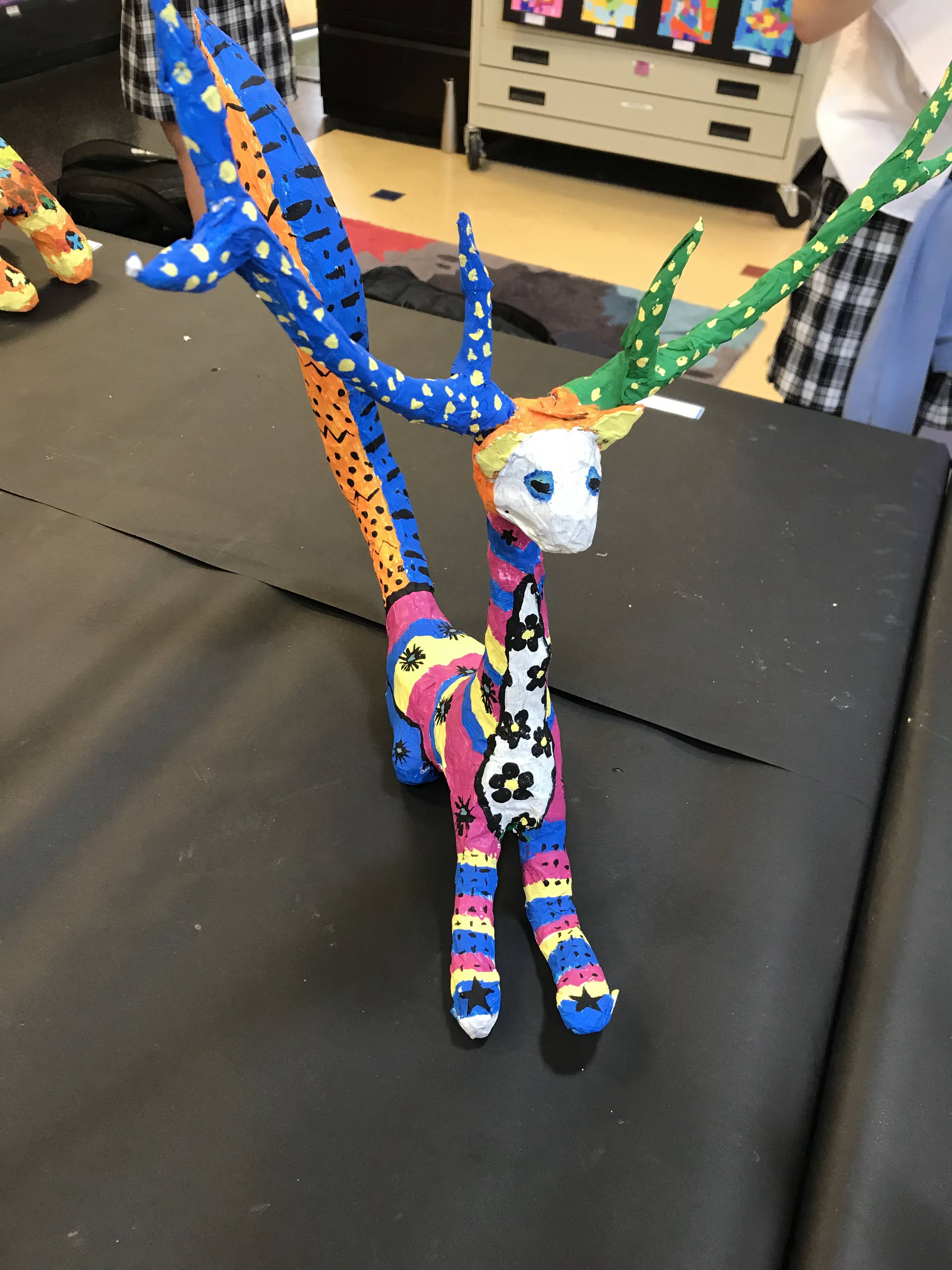
An example of when I did this project as a sculpture lesson from 8th grade class.

 In the Art Room with Mrs. D
1 thought on “Color Scheme Alebrijes”