
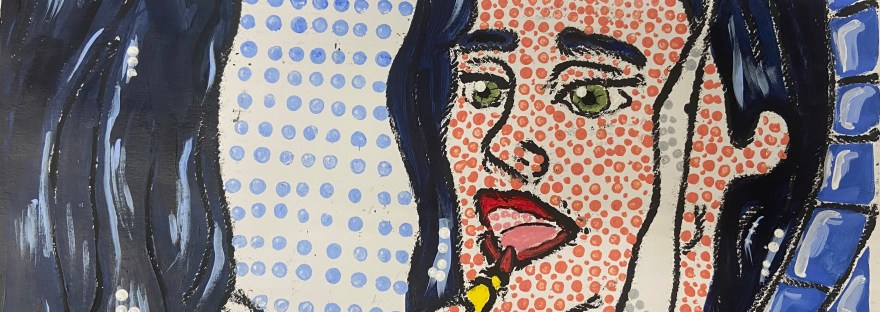
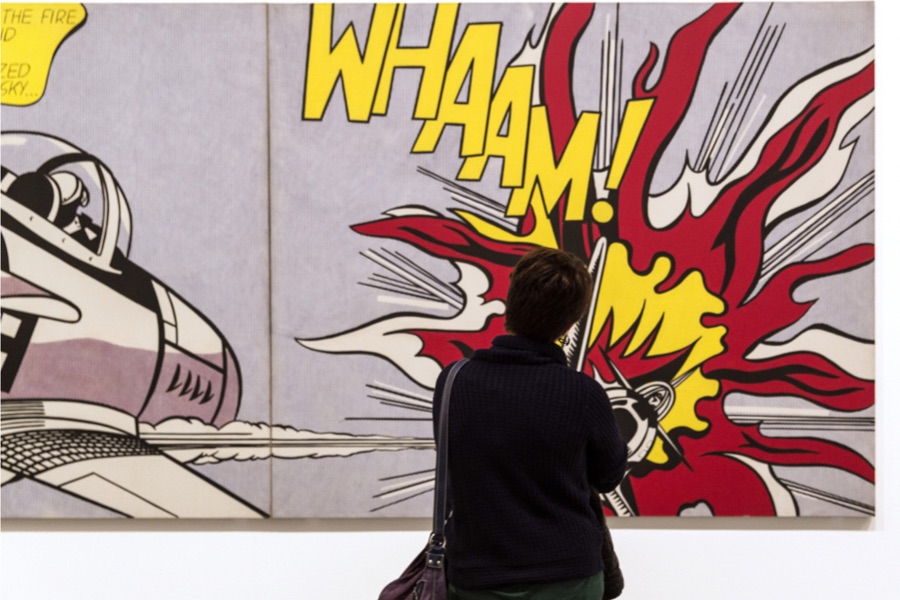
Roy Lichtenstein was an American Pop Artist who grew in popularity in the 1960’s along with Andy Warhol, Jasper Johns, and others during this exciting art movement. Most famous for his comic book like paintings, Lichtenstein took inspiration from the idea of mass production and popular culture combined with humor for his pieces. Below is a great video for elementary school and up. It is short and has a lot of interesting information to help get your students ready for their own Lichtenstein inspired artwork.
Materials
- Yarn
- glue
- Cardboard
- brayer brush and something to roll your ink on (plastic folders work well)
- Ink
- Paper
- paint
- medical q-tips


Steps
- Pre-activity: I usually have all my students watch the short documentary because it has a lot of good background information and is appropriate for all ages. For my older students, I assign a reflection on the documentary. This usually consists of them telling me three things they learned about the artist from the video.
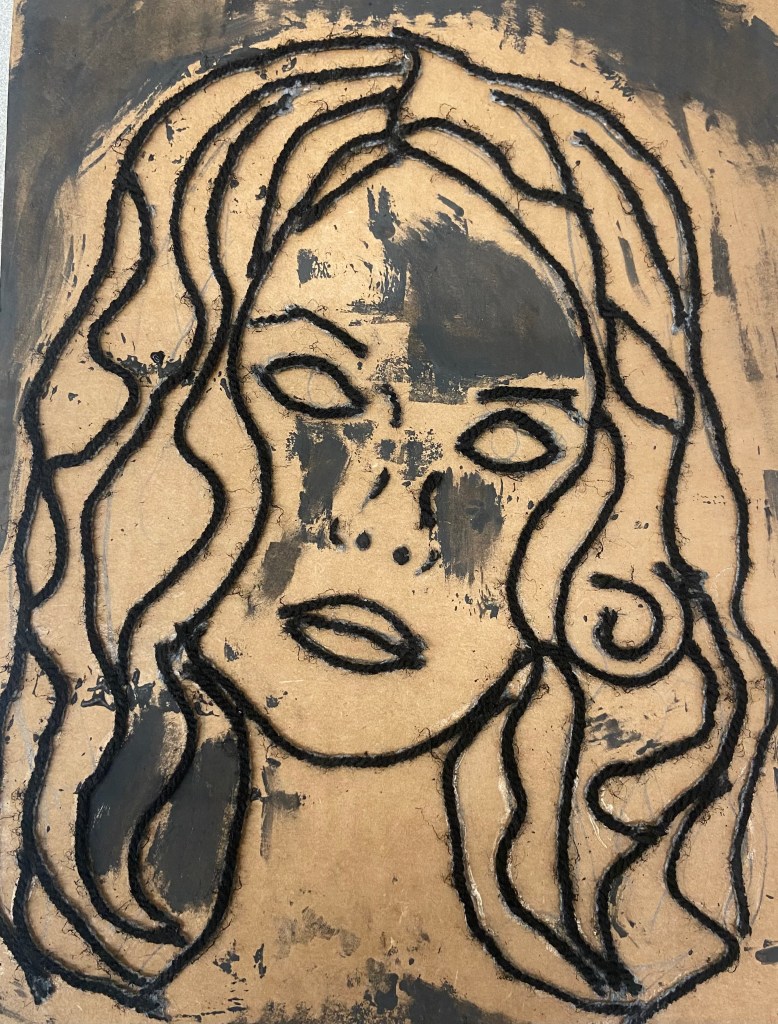
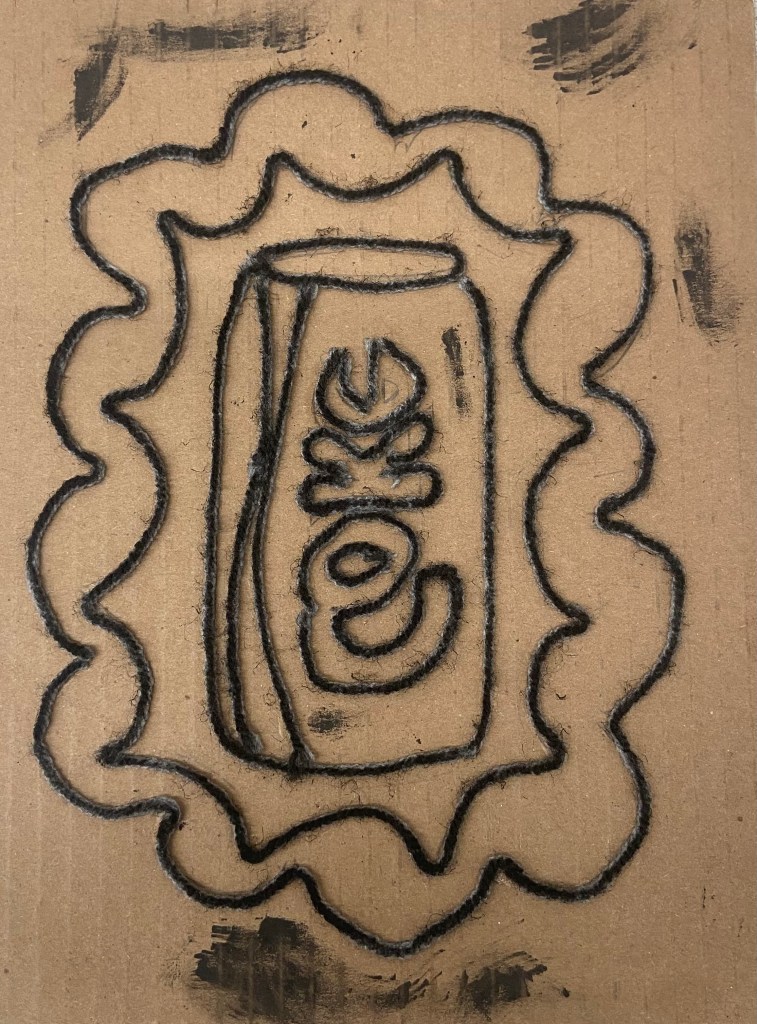
- Rough Drafts: for this particular project, they were given the option to do a product, a word, or a portrait. I have them complete three rough drafts and do not expect masterpieces from this step. This part of the process is to get their ideas out. They can try one of each option or three different ideas for one option. The rough draft should be in the style of Roy Lichtenstein. The rough draft will not be colored, but you could also have them list what colors they will be using.
- Printing Plate: when rough drafts are approved, students can begin creating their printing plate with yarn, glue, and cardboard. If words are being used, be sure to explain that they need to be backwards or else the word will be backwards on the print.
- Print: when the glue is dry on their plate, they can ink and print their artwork. Use the ink, ink plate, brayer, and printing paper to complete. Ink should not be too thick and the brayer should have a thin layer that has a sticky sound when rolled. When there is too much ink on the brayer, it will not sound like that. Students can reprint until they are satisfied with their print for their final image.
- Final Art: the finished print will then be colored in using Roy Liechtenstein’s style. Bright, block colors, thick black lines, and benday dots. Use the q-tips to easily apply the benday dots (the dots that are inspired by the printing process)

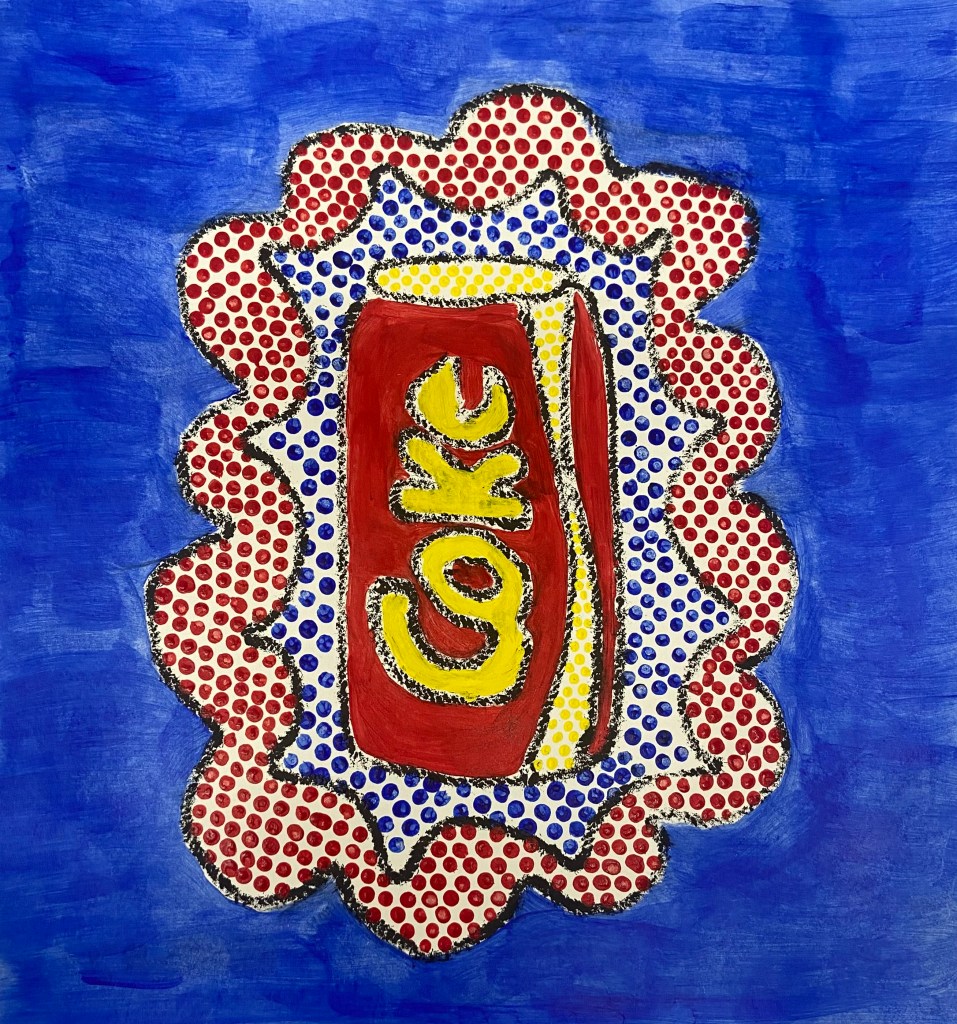
Art lesson was designed by myself but taught by a long term substitute while on leave.

 In the Art Room with Mrs. D