
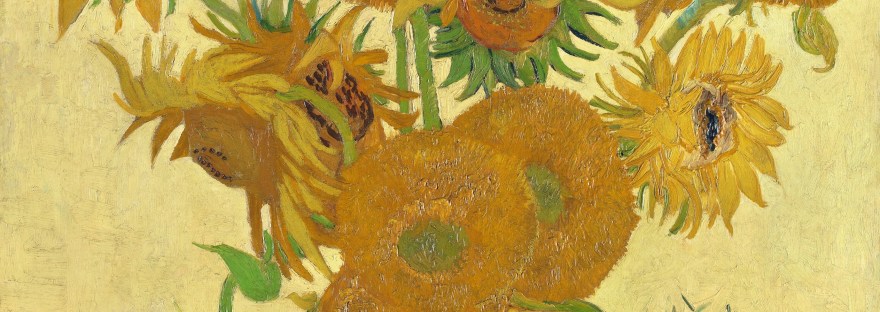
Once students have learned about primary colors, the next step is to introduce them to secondary colors. I like to do this by introducing Vincent Van Gogh and using one of his famous pieces as an inspiration for the students.
Introduction
The first thing I always like to do is revisit previous concepts they have learned. I usually do this lesson with first grade after they have done a primary color lesson. Then I discuss our inspiration for our artwork, Vincent Van Gogh. A great YouTube channel for art history is Art with Mati and Dada. This channel clearly explains the artist, their style, and the meaning behind their work. I have found myself using these videos even with my high school students because the videos are short, clear, and to the point. My suggestion would always be to warn them that you know these videos are meant for little kids, but that the information is good.
After watching the video, I would then show a few of Van Gogh’s famous works for a discussion on what they see. Getting students talking about art young helps them to develop this skill as they get older and grow more comfortable talking about art. I also like to ask if anyone knows how many art pieces Van Gogh during his life. Wild guesses ensue until I tell them that it was only one and discuss why this may be and how art isn’t always appreciated when being made.
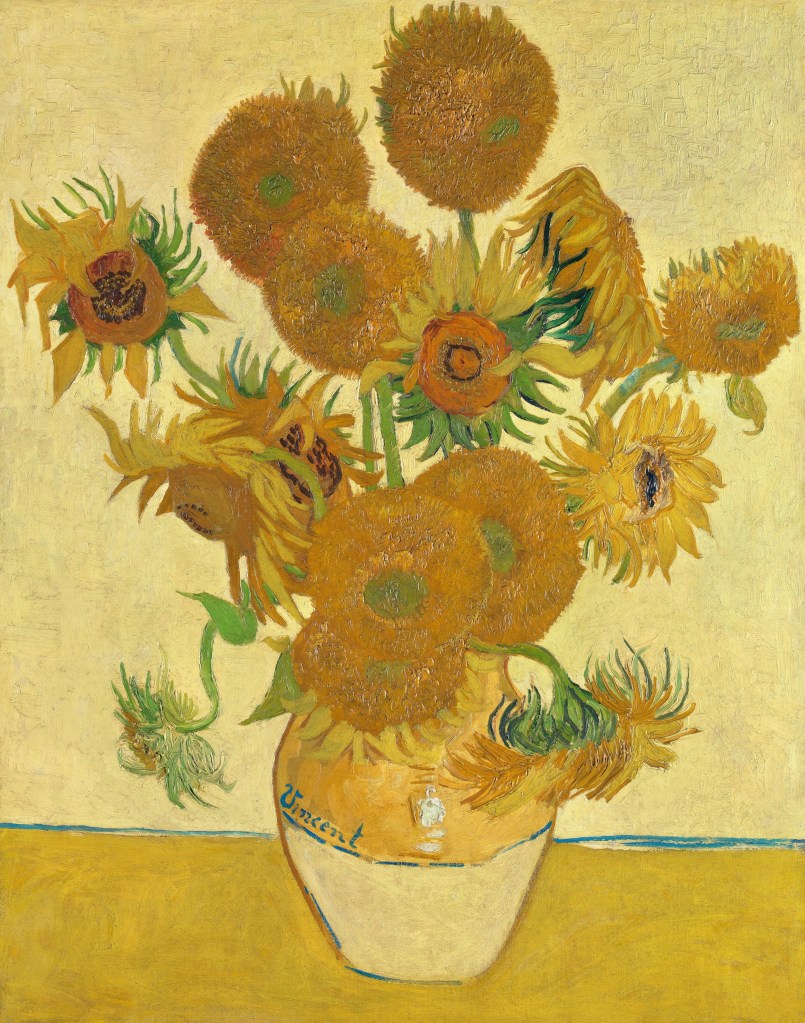
I would end the discussion by showing Van Gogh’s Sunflowers (1888)
Materials
- watercolor paper
- liquid watercolors (liquid is easier for the younger kids to mix. They can also start off with the secondary color and add more of the primary color to change the hue to a color that they like)
- paintbrush
- ultra fine-tip sharpie (a box of 12 tends to be cheaper per sharpie than buying a single or double pack)
- eraser
- image for reference
As an Amazon Associate I earn from qualifying purchases
Art Lesson
- Students will receive a piece of paper to recreate Van Gogh’s Sunflower painting. I encourage them to use this image as inspiration and not necessarily copy it exactly. With them being first graders, this isn’t usually a problem and get many different variations. My only requirement is that they place their name on the vase where it says “Vincent”
- When finished drawing, students will outline their work in super fine-tip sharpie and erase any extra pencil marks.
- Students will paint their image using the secondary colors, purple, orange, and green. They will choose one section to color each color, the flowers and vase, the background, and the tabletop. For example, a student might choose purple for the flowers and vase, orange for the background, and green for the tabletop.
- Students will be able to mix the colors using liquid watercolor. They will start with purple, green, and orange and then be able to add in order to change the hue. For example, they can make a purple more blue by adding blue.
- Finally, students paint. Have them complete one section at a time so that they do not have too many colors in front of them at once.
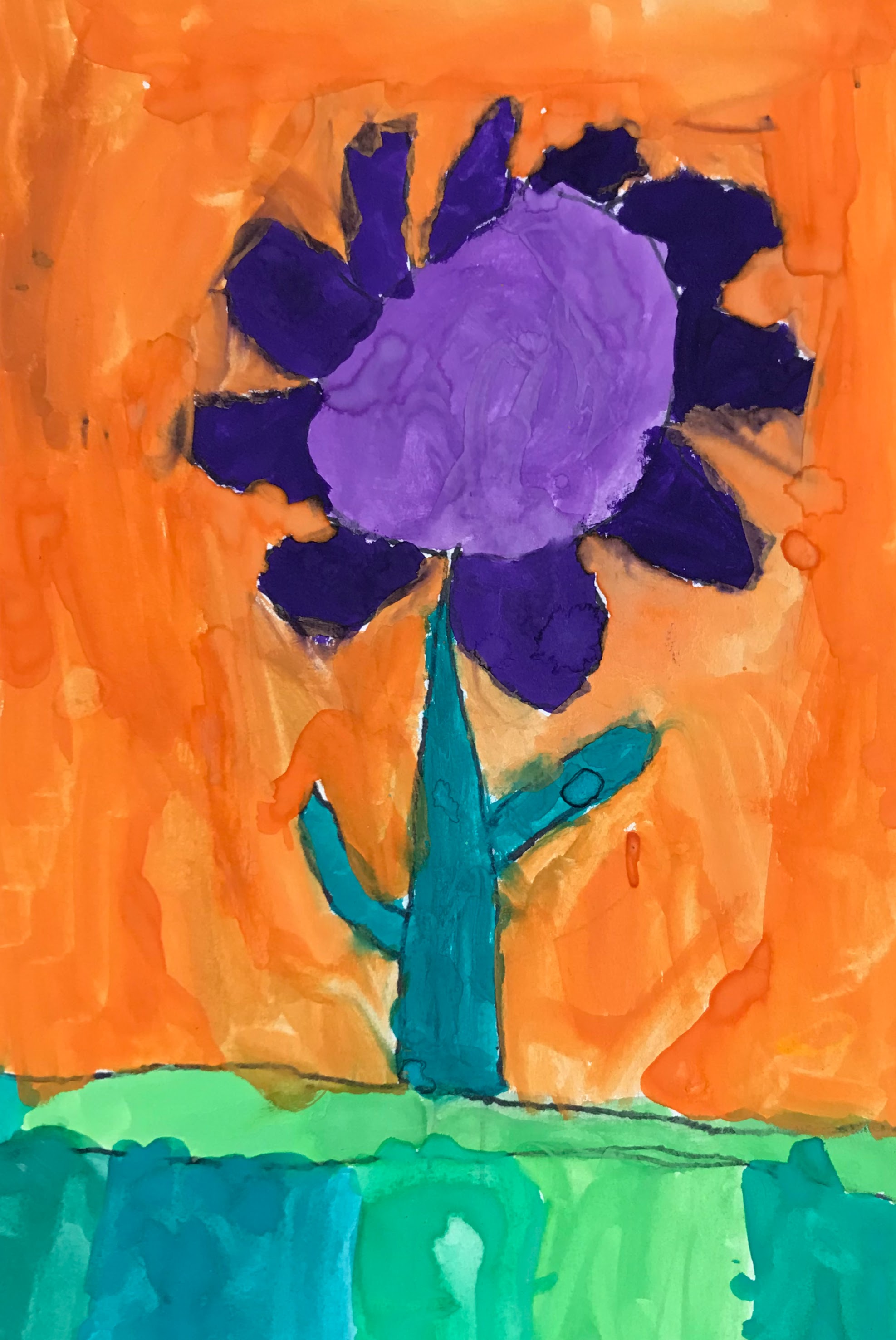
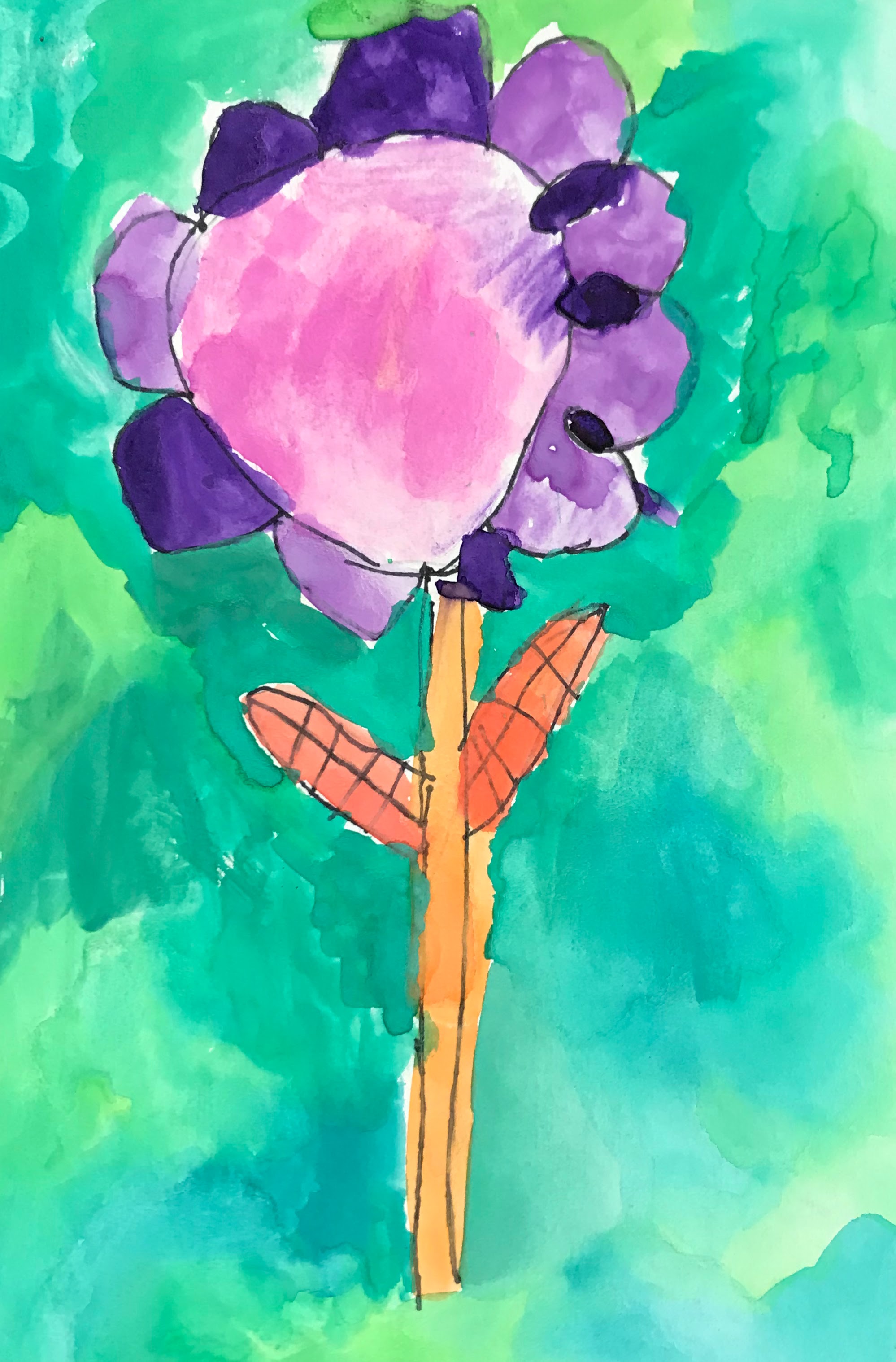
These samples were based on an a different image. Final images would reflect Van Gogh’s Sunflowers.

 In the Art Room with Mrs. D